
Injection Molding - Complete Guide, Costs, Pros and Cons
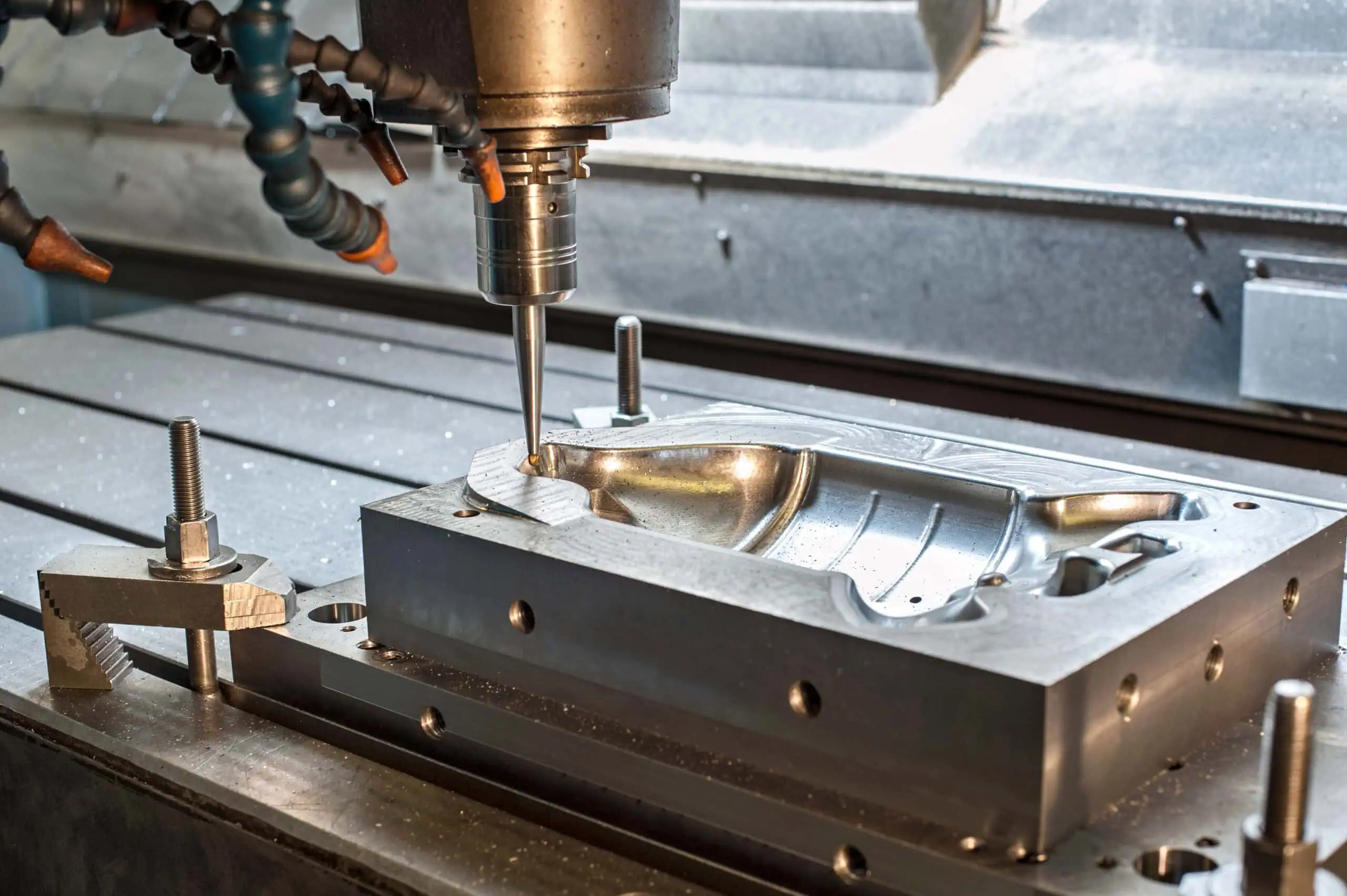
- Why injection molding still wins for real products
- How injection molding works - a quick walk through
- Pros and cons at a glance
- What the mold costs and how long it lasts
- Design rules that actually move the needle
- Gates, runners, cooling and ejection
- Materials and shrinkage - what to expect
- Cycle time, automation and price per part
- Surface finishes and cosmetics
- Common defects and how to fix them
- Sustainability and recycled content
- When to pick molding over CNC or 3D printing
- How we approach a molding project at Novafab
- FAQ
Why injection molding still wins for real products
When you need thousands to millions of identical plastic parts, injection molding is hard to beat. It gives you repeatability, speed, strength in the right directions, a wide library of materials and finishes, and per part prices that drop as volume rises. The tradeoff is up front investment in tooling and in the care you take with design. If you do that homework, a mold can run for years and pay for itself many times over.
How injection molding works - a quick walk through
The machine heats plastic pellets until they flow, injects the melt under pressure into a steel cavity, cools it in a controlled way, ejects the part, then repeats. You resolve almost everything - cost, quality, cosmetic - in the mold design and in the cycle setup. The machine only does what the tool and settings ask it to do.
- Pellets feed into a heated barrel and screw.
- Melt is injected through a sprue and runners into one or more cavities.
- Cooling channels in the mold extract heat in a controlled way.
- Ejector pins, sleeves or plates push the cooled part out.
- Robots or operators pick parts, trim gates, and pack for QC.
Pros and cons at a glance
| Pros | Cons |
|---|---|
| Very low cost per part at medium to high volume | Tooling cost and lead time up front |
| Excellent repeatability and material consistency | Design must respect moldability and draft |
| Huge material and finish library | Geometry limits - undercuts need side action or lifters |
| Fast cycles once tuned | Changes after tool steel is cut can be expensive |
What the mold costs and how long it lasts
Tooling cost is not a single number. It depends on complexity, size, material, cavities, side actions, and finish. As a rule of thumb, single cavity aluminum prototype tools start in the low thousands. Production steel tools with multiple cavities and sliders can be tens of thousands or more. The point is not to fear the number, but to understand how it amortizes over parts.
| Mold material | Typical use | Approx lifespan | Notes |
|---|---|---|---|
| Aluminum | Prototype and short runs | 5k - 50k shots | Fast to machine, easy to modify, watch wear with glass filled resins |
| P20 steel | General production | 100k - 500k shots | Good balance of cost, machinability and life |
| H13 or hardened steel | High volume or abrasive resins | 500k - 1M+ shots | More expensive, slower to machine, very durable |
| Beryllium copper inserts | Heat hotspots | - | Used as localized inserts for better cooling and cosmetics |
To make sense of tooling spend, look at total landed cost. Here is a simplified view to illustrate amortization. Real quotes depend on part size, cycle time and resin price.
| Volume | Example tool | Tool cost | Part cost estimate | Amortized tool per part | Estimated total per part |
|---|---|---|---|---|---|
| 500 | Single cavity aluminum | 6,000 | 2.50 | 12.00 | 14.50 |
| 5,000 | Single cavity steel | 18,000 | 1.40 | 3.60 | 5.00 |
| 50,000 | 4 cavity steel with sliders | 45,000 | 0.55 | 0.90 | 1.45 |
| 250,000 | 8 cavity hardened steel | 95,000 | 0.38 | 0.38 | 0.76 |
Numbers are illustrative - your quotes will vary with geometry, resin and cycle time. The point stands - once you cross a few thousand units, the tool starts to pay for itself.
Design rules that actually move the needle
Design for molding is mostly about letting the part fill and cool cleanly. The rules below work because they respect flow and shrink. They are not arbitrary.
| Feature | Good starting point | Better when possible | Why it works |
|---|---|---|---|
| Draft angle | 1 degree on ribs and walls | 2 to 3 degrees on textured faces | Easier ejection, less scuffing, cleaner texture |
| Wall thickness | 2.0 to 3.0 mm for many resins | Uniform thickness with coring | Even cooling, less sink and warp |
| Ribs | 0.5 to 0.7 times wall thickness | Drafted, with fillet at base | Stiffness without sink |
| Bosses | OD 2 times screw size | Ribs to nearby walls | Strength without mass |
| Fillets | Generous everywhere | Blend transitions | Flow and strength |
| Holes | Through where possible | Avoid deep blind holes | Easier venting, easier ejection |
Add texture and logos in the mold, not as secondary processes. If you need metal inserts, design for heat staking or ultrasonics and leave room for the staking horn. If you must have a sharp outer corner, understand that inside corners must still have a radius, so plan your geometry to hide that radius or celebrate it.
Gates, runners, cooling and ejection
Gate choice influences cosmetics, weld lines and cycle time. Cooling layout controls cycle time and warpage. Ejection strategy protects sensitive surfaces. These are not afterthoughts. They are the mold.
| Element | Options | Use when | Watch out for |
|---|---|---|---|
| Gates | Edge gate, pin gate, submarine, hot tip, fan gate | Small parts - pin, cosmetic face away - edge or sub, multi cavity - hot runner | Gate blush, vestige, weld lines, air traps |
| Runners | Cold runner, hot runner | Cost sensitive - cold, high volume and low waste - hot | Cold runner waste, hot runner maintenance |
| Cooling | Straight bores, baffles, bubblers, conformal cooling inserts | Simple tools - straight, complex cores - baffles, high spec - conformal cooling | Uneven cooling, hotspots that cause sink or warp |
| Ejection | Pins, sleeves, stripper plate, air blast | Flat parts - stripper, deep cores - sleeves, general - pins | Pin marks, scuffing, sticking on core |
We like to review gating early with a simple fill and pack simulation. You do not need a perfect CFD model to spot likely weld lines or air traps. A small change to gate location or draft at this stage saves expensive tool work later.
Materials and shrinkage - what to expect
Different resins shrink different amounts as they cool. Fillers change this again. You can machine the mold to compensate, but the best first move is to choose a resin that fits function and cosmetics, then design geometry that is friendly to that resin. Typical shrink ranges below.
| Material | Typical shrink range | Notes |
|---|---|---|
| ABS | 0.4 percent - 0.8 percent | Easy to mold, good cosmetics, tough |
| PC | 0.5 percent - 0.7 percent | Clear, strong, can stress crack - watch solvent exposure |
| PP | 1.0 percent - 2.5 percent | Lightweight, chemical resistant, higher shrink |
| Nylon PA6 or PA66 | 0.7 percent - 1.5 percent | Strong, absorbs moisture - dimensional change with humidity |
| POM acetal | 1.5 percent - 2.0 percent | Low friction, great for mechanisms, watch thermal expansion |
| Filled grades glass or mineral | 0.1 percent - 0.6 percent | Lower shrink and warp, abrasive to tools, watch weld lines |
Always check your resin data sheet. Shrink varies with grade, fiber orientation, melt temp, mold temp and packing.
Cycle time, automation and price per part
Cycle time is clamp close - inject - pack - cool - open - eject - reset. Cooling dominates time. The fastest way to reduce price per part is to shorten cooling without hurting cosmetics. That is why cooling layout and uniform wall thickness matter so much. Robots reduce handling time and some cosmetic defects by taking parts out consistently. For short runs, a skilled operator is fine. For long runs, we plan end of arm tooling and part stacking inside the cycle.
Surface finishes and cosmetics
Finish is a tool choice. You polish or texture the steel. SPI grades give you a common language from glossy to matte. You can combine finishes to hide flow lines or to make touch zones feel better. If your design needs a painted or plated finish, test adhesion on molded samples early. Some resins want primers, some want plasma treatment, and some should be textured in the tool instead of painted at all.
| Finish | Effect | Notes |
|---|---|---|
| SPI A1 - A3 | High gloss polish | Shows everything, great for lenses and clear PC |
| SPI B1 - B3 | Semi gloss | Balanced cosmetic and cost |
| SPI C1 - C3 | Satin | Hides flow lines better |
| EDM or etched textures | Grip and scratch hiding | Plan more draft for heavy textures |
Common defects and how to fix them
| Defect | Likely causes | Fixes we try first |
|---|---|---|
| Sink marks | Thick sections, hot spots, poor packing | Core out thick areas, add ribs, improve cooling, increase pack and hold |
| Warp | Uneven cooling, fiber orientation, non uniform walls | Balance wall thickness, tweak cooling, change gate, consider filled resin |
| Short shots | Vent issues, low melt temp, gate too small | Improve venting, raise melt and mold temp, enlarge or move gate |
| Flash | Clamp force low, worn parting line, excessive injection pressure | Increase clamp, repair parting line, reduce pressure or speed |
| Weld lines | Flow fronts meet and do not fuse well | Move gate, raise melt and mold temp, try different resin or add venting |
| Bubbles or voids | Moisture, trapped gas, bad packing profile | Dry resin, improve venting, adjust pack profile |
Sustainability and recycled content
Molding can be efficient. You can run with recycled content, use cold runner regrind where allowed, and design parts that assemble without fasteners. Energy is a factor - modern all electric machines are efficient, and good cooling layout reduces cycle time and energy per part. If sustainability is a goal, define it early so resin and process choices align. There is no magic later if the base resin fights adhesion or texture or if the cycle time is locked in by a poor cooling scheme.
When to pick molding over CNC or 3D printing
| Volume | Best process | Why |
|---|---|---|
| 1 - 50 | 3D printing or CNC | Fast, no tooling, design can change daily |
| 50 - 1000 | Bridge molding or CNC | Prototype aluminum tool or small batch machining |
| 1000+ | Injection molding | Tooling amortizes, unit cost drops fast, consistent cosmetics |
We also look at geometry. Parts with living hinges, thin uniform walls and mass production finishes want molding. Thick, blocky, high precision parts with small quantity runs often cost less with CNC. Lattice or internal channels suggest additive.
How we approach a molding project at Novafab
- Define function, target volume, cosmetic level and budget.
- DFM pass - draft, thickness, ribs, bosses, gates and parting line suggestions.
- Material shortlist with shrink and cosmetic notes. Color and texture decisions now.
- Prototype - 3D print or CNC to prove fit and assembly while tooling is designed.
- Tool design - gating, cooling, ejection, side actions. Quick simulation to check fill and weld lines.
- Tool cut and T1 samples - record defects, adjust process, minor steel changes as needed.
- T2 and sign off - finalize settings, gauge critical dimensions, freeze color and finish.
- Ramp - document cycle, packaging, QC plan and change control.
FAQ
How long does a mold really last
Aluminum tools are fine for thousands to tens of thousands of parts if the resin is not abrasive. P20 can run hundreds of thousands. Hardened steel with good care can pass one million shots. Inserts and local repairs extend life.
Can we change the design after T1
Small changes are possible. Adding material is easier than removing it. That is why we push to sign off draft, thickness and gate positions before steel is cut.
What drives unit cost the most
Cycle time and yield. If the part cools evenly and ejects cleanly, you can run faster with fewer rejects. That is cooling, geometry and process control more than anything else.
Is hot runner always better
No. Hot runners add cost and maintenance. They shine when scrap cost, cycle time and multi cavity balance matter. For smaller volumes, cold runner is simple and robust.
How do we avoid sink on bosses
Thin the boss walls, connect bosses to walls with ribs, and adjust packing and cooling. If cosmetics are critical, move the gate or add local cooling to reduce hotspot.